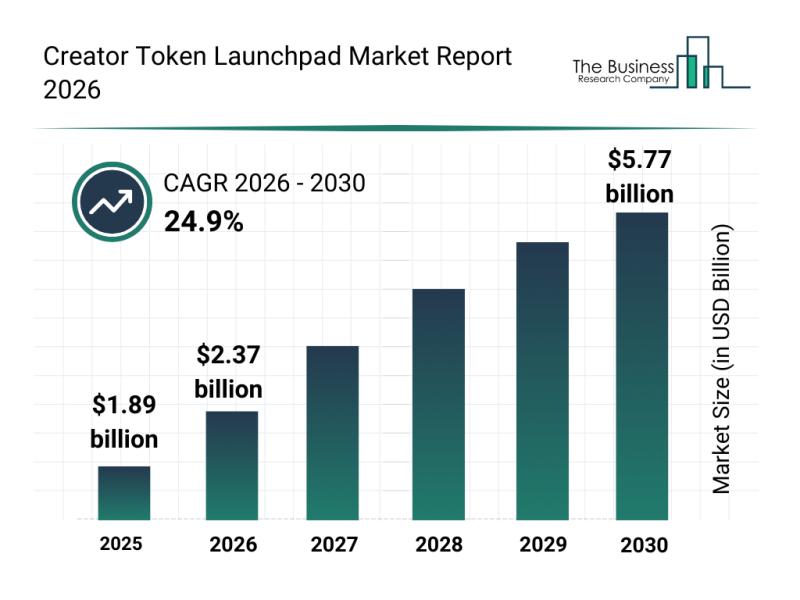
Market growth and revenue models
The creator token market is shedding its speculative skin. In 2026, the sector is valued at approximately USD 1.98 billion, with projections pointing toward USD 4.49 billion by 2030. This growth is not driven by viral hype cycles but by a structural shift toward utility-driven revenue sharing and sustainable infrastructure. According to Research and Markets, this expansion represents a compound annual growth rate (CAGR) of 22.7%.
This trajectory signals a maturation of the asset class. Early entrants treated tokens as lottery tickets; current infrastructure treats them as financial instruments. The focus has moved from minting novelty to building ecosystems where holders benefit from ongoing creator output. This utility-first approach reduces the volatility that previously plagued the space, making creator tokens more viable for long-term portfolio allocation.
As the market scales, the distinction between social media engagement and financial ownership is blurring. Creators are leveraging blockchain technology to offer tangible rights—such as access to exclusive content, governance votes, or revenue splits—rather than simple digital collectibles. This evolution requires robust backend systems that can handle transaction volume while maintaining compliance, a challenge that newer platforms are addressing with institutional-grade security protocols.
The financial implications are significant. For creators, tokenization opens a new revenue stream that is not dependent on platform algorithms or ad revenue. For investors, it offers exposure to the performance of individual digital personalities, decoupling value from the broader crypto market's beta. As infrastructure improves, we expect to see more standardized contracts and clearer regulatory frameworks, further solidifying the market's foundation.
How Infrastructure Is Lowering the Barrier to Entry
The technical friction that once made token issuance a niche developer task is dissolving. Creators no longer need to manage complex smart contract deployments or worry about fragmented liquidity pools. Instead, lighter chains and unified liquidity layers are handling the heavy lifting, allowing creators to focus on audience engagement rather than backend maintenance.
This shift is driven by the rise of purpose-built Layer 2 solutions and aggregators that abstract away the complexity of decentralized finance. By standardizing the issuance process, these platforms have turned what was once a high-risk, high-cost endeavor into a streamlined utility. The result is a more accessible market where the primary variable for success is content quality, not technical sophistication.
To understand the scale of this movement, it helps to look at the broader social token ecosystem. The following chart tracks the performance of a major social token index, reflecting how institutional and retail interest is flowing into these infrastructure-heavy assets.
As these platforms mature, the distinction between traditional creator economies and on-chain finance is blurring. Unified liquidity means that once a token is issued, it can be traded, staked, or used for access without leaving the platform. This reduces the risk of illiquidity—a common pain point for early-stage creator coins—and provides a more stable environment for long-term community building.
The infrastructure is no longer just a backend utility; it is the foundation of the creator economy's next phase. By removing the technical barriers, these platforms are enabling a new wave of digital ownership that is both accessible and scalable.
Comparing creator token strategies
Choosing the right token model depends on what you want to build and how much technical overhead you can manage. While all three types allow creators to engage directly with their audience, they serve very different purposes and carry distinct risks.
Utility tokens
Utility tokens function like digital keys. They grant access to specific products, services, or exclusive content that cannot be bought with fiat currency. For example, a musician might issue tokens required to purchase limited-edition vinyl or early access to a tour. This model works best for creators who have tangible goods or experiences to sell.
Membership tokens
Membership tokens act as digital IDs. Holding the token proves you are part of a community, unlocking forums, Discord roles, or monthly Q&A sessions. Unlike utility tokens, these don't usually grant ownership in a product but rather a place in a group. They are ideal for building loyalty and recurring engagement rather than one-off sales.
Revenue share tokens
Revenue share tokens represent a piece of the business. Holders may receive a portion of profits, royalties, or voting rights on creative decisions. This is the most complex model legally and technically, often requiring compliance with securities laws. It aligns incentives closely but introduces significant regulatory risk and administrative burden.
| Feature | Utility Token | Membership Token | Revenue Share Token |
|---|---|---|---|
| Primary Value | Access to goods/services | Community status | Financial return/voting |
| Technical Complexity | Low to Medium | Low | High |
| Legal Risk | Low | Low | High |
| Best For | E-commerce, exclusive drops | Fan clubs, gated content | DAOs, profit-sharing models |
Strategic ROI for creators
Measuring the return on investment for a creator token requires shifting focus from speculative price action to tangible utility. Unlike standard NFTs that often rely on secondary market flips, creator tokens generate value through direct commerce and sustained community engagement. The most successful infrastructure supports exclusive access, allowing creators to monetize art, music, or services that cannot be acquired elsewhere.
1. Establish Exclusive Commerce Channels
The primary driver of ROI is the ability to sell unique goods or services exclusively to token holders. This creates a closed-loop economy where demand is tied to utility rather than hype. Creators should integrate token-gated storefronts that automatically verify ownership before allowing purchases. This reduces friction for loyal fans while creating a scarcity premium that standard e-commerce platforms cannot replicate.
2. Implement Tiered Engagement Models
Not all holders contribute equally to your revenue. Structuring your token infrastructure with tiered benefits allows you to capture value from both casual supporters and high-value patrons. Lower tiers might offer digital badges or early access to content, while premium tiers unlock one-on-one consultations, physical merchandise, or voting rights on future projects. This segmentation ensures that every level of engagement has a clear, monetizable path.
3. Monitor On-Chain Engagement Metrics
Traditional analytics like page views are insufficient for measuring token health. Instead, focus on on-chain metrics such as holder retention rates, transaction volume, and active wallet addresses. These data points reveal whether your community is truly engaged or simply speculating. Tools like Messari can provide industry-leading intelligence to help you analyze these metrics with confidence, ensuring you are making data-driven decisions rather than guessing.
4. Reinvest Revenue into Community Growth
Sustainable ROI comes from reinvesting a portion of token sales back into the community. Funding exclusive events, developing new utility features, or creating co-branded merchandise keeps the ecosystem vibrant. This cycle of reinvestment strengthens the bond between creator and holder, transforming passive investors into active brand ambassadors who drive organic growth.
Note: The chart above reflects general market conditions. Creator token performance is highly idiosyncratic and depends on individual project utility and community strength.
Key questions on market data
Finding reliable data for creator tokens requires separating marketing hype from institutional-grade intelligence. Most retail platforms offer fragmented metrics, but professional infrastructure providers aggregate on-chain activity, liquidity depth, and developer metrics into a single view.
What is Messari crypto?
Messari delivers industry-leading crypto intelligence, empowering professionals with the data and insights they need to understand the market with confidence. It provides analyst-verified intelligence across 40,000+ assets, making it a standard for institutional research. For creator tokens, this means access to verified liquidity pools and holder distribution data that retail dashboards often obscure.
How do I track creator token ROI?
Tracking ROI requires monitoring both price action and platform-specific engagement metrics. Unlike standard altcoins, creator tokens often have utility tied to content release schedules or community access. You must correlate price movements with these fundamental triggers rather than relying solely on technical indicators.
Are creator token markets liquid enough?
Liquidity varies significantly by creator tier. Top-tier influencers often have deep order books, while mid-tier tokens can suffer from slippage during volatility. Always check the 24-hour volume relative to market cap before entering a position.
No comments yet. Be the first to share your thoughts!