Market size and growth trajectory
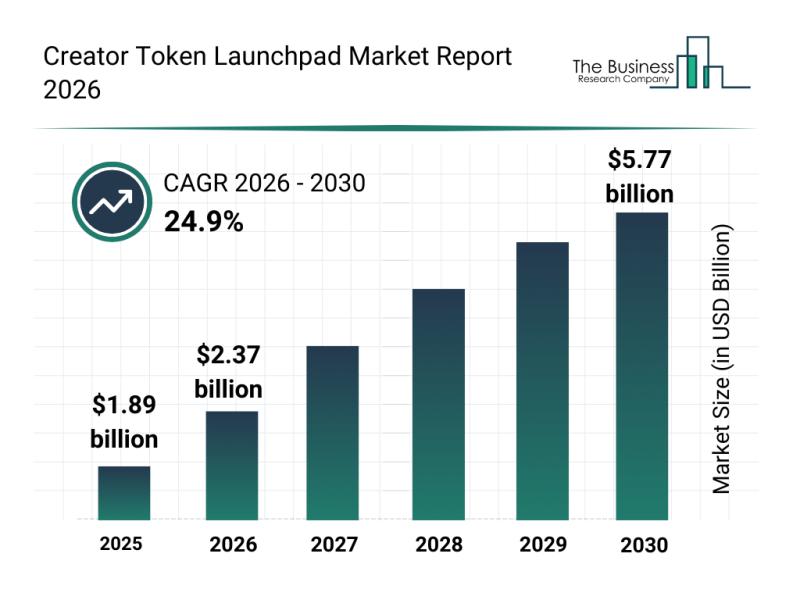
The social token market is no longer a niche experiment; it is a rapidly expanding asset class. According to Research and Markets, the market was valued at USD 1.98 billion in 2026 and is projected to reach USD 4.49 billion by 2030. This represents a compound annual growth rate (CAGR) of 22.7%, signaling strong institutional and retail interest in creator-led digital assets.
This growth trajectory validates the creator token opportunity for 2026. As infrastructure improves and user adoption deepens, the barrier to entry for creators lowers while the potential for sustainable revenue increases. The data suggests that social tokens are moving from speculative hype to a fundamental component of the creator economy's financial stack.
For investors and creators alike, understanding this scale is critical. The market is not just growing; it is maturing. The infrastructure supporting these tokens—ranging from issuance platforms to secondary marketplaces—is becoming more robust, enabling higher liquidity and more sophisticated financial products for creators.
How Creator Tokens Are Built
The infrastructure behind creator tokens is less about complex code and more about accessible issuance platforms. Creators don't need to deploy smart contracts from scratch; they use specialized platforms that handle the technical heavy lifting. These platforms act as the bridge between traditional social media profiles and on-chain assets, allowing artists, musicians, and influencers to mint ERC-20 tokens that represent their brand or community access.
Most creator tokens operate on established blockchain layers like Ethereum, Base, or Solana. The choice of chain affects transaction costs and speed, which directly impacts how fans interact with the token. For instance, Base has gained traction for creator coins due to its low fees and integration with Coinbase's ecosystem, making it easier for mainstream users to buy and hold without navigating complex wallets. This infrastructure shift has lowered the barrier to entry, turning token issuance into a feature rather than a development project.
Issuance platforms also provide the valuation mechanics. Unlike traditional stocks, creator tokens often use automated market makers (AMMs) to set prices based on supply and demand. This means the token's value isn't fixed by a company but fluctuates based on community engagement and trading volume. Some platforms, like Zora, allow creators to earn a percentage of secondary trading volume, creating a direct feedback loop between fan activity and creator revenue.
To understand the market dynamics driving these tokens, it helps to look at broader social token indices. While individual creator tokens can be volatile, tracking their performance alongside major crypto assets provides context for their utility and adoption trends.
These platforms are redefining how value is captured in the creator economy. By removing intermediaries, they allow creators to retain more control and revenue, while fans get a tangible stake in the creator's success. As the technology matures, we can expect more sophisticated tools for governance and utility, further integrating these tokens into daily digital interactions.
How creators monetize with tokens
Creator tokens let artists, musicians, and influencers sell access directly to their audience without intermediaries. The core mechanic is simple: hold the token, get the perks. Many creators offer exclusive commerce—art, music, crafts, or services that can only be acquired with their specific token [src-serp-2]. This creates a closed-loop economy where value flows straight from fan to creator.
Beyond selling physical goods, tokens serve as keys to community building. Holding a token often grants entry to private Discord servers, early access to drops, or voting rights on future projects. This shifts the relationship from passive consumption to active participation. Fans aren't just buying a product; they're buying a stake in the creator's ongoing narrative.
Revenue generation happens on two fronts. First, there's the initial sale of tokens. Second, and often more lucrative, is the trading volume. As noted in recent analyses of token revenue models, creators can earn a percentage of every secondary trade [src-serp-4]. This aligns incentives: the more the community engages and trades, the more the creator benefits.
The following table compares the three primary monetization paths to help you identify which model fits your strategy.
| Model | Primary Focus | Revenue Source |
|---|---|---|
| Exclusive Access | Community & Loyalty | Token sales & secondary fees |
| Trading Volume | Speculation & Liquidity | Percentage of trades |
| Service Access | Utility & Commerce | Direct sales of goods/services |
Essential tools and analytics
Tracking creator token performance requires more than just watching a price ticker. You need a stack that combines on-chain data, market sentiment, and platform-specific metrics. The right tools help you separate genuine community growth from artificial inflation.
Start with a reliable price widget for real-time valuation. Static prices age quickly and can mislead your strategy. A live provider-backed chart shows the actual trading volume and liquidity depth, which are critical for assessing the health of a creator token.
For deeper analysis, use a technical chart to identify trends. Look for volume spikes that correlate with content releases or community events. These tools allow you to monitor the creator token lifecycle without getting lost in noise.
To round out your toolkit, consider resources that explain tokenomics and market strategy. Understanding the underlying mechanics helps you interpret the data correctly.
As an Amazon Associate, we may earn from qualifying purchases.
Creator coins and tokenization trends
The social token market is scaling rapidly. Research and Markets values the sector at $1.98 billion in 2026, projecting it to hit $4.49 billion by 2030. This 22.7% annual growth rate signals that creator coins are moving from niche experiments to established infrastructure.
At the protocol level, Base app creator coins have simplified the entry barrier. Linked to a creator’s profile and powered by Zora, these ERC-20 tokens allow creators to earn directly from trading volume. It is a straightforward mechanism: the community buys, the creator benefits, and the ecosystem grows without complex smart contract management.
Beyond individual creator coins, the broader tokenization of assets is reshaping the landscape. We are seeing a shift toward tokenized stocks and real-world assets, which promise to integrate traditional finance with crypto rails. Even critics of the industry acknowledge that these innovations are having a profound effect on global commerce.
No comments yet. Be the first to share your thoughts!